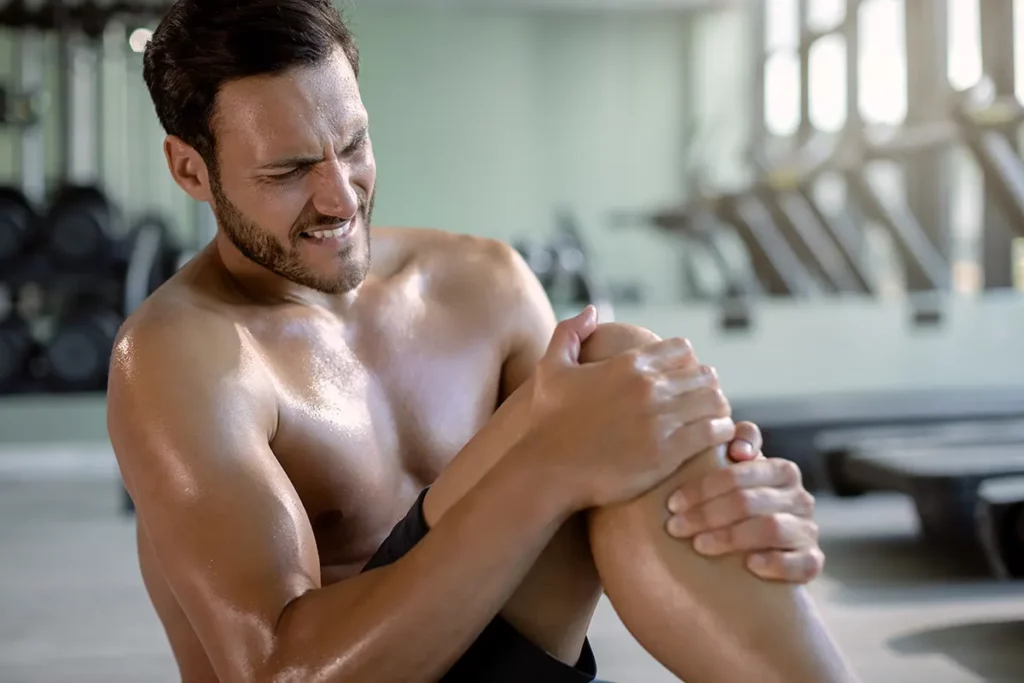
A sore knee after a long run, a heavy leg session or a tough match is familiar territory for many active people. But when should knee pain worry you rather than simply prompt a day or two of reduced training? The answer comes down to how the pain started, what it stops you doing, and whether there are signs that the joint needs urgent assessment.
Most knee pain is not an emergency. It may reflect an overload, poor recovery, a sudden increase in mileage, weakness around the hip or ankle, or a movement pattern that is putting more pressure through the joint than it can currently manage. Still, pushing through every ache is not a badge of commitment. It can turn a manageable issue into a longer lay-off.
When should knee pain worry you?
Knee pain deserves closer attention when it is severe, persistent, worsening, or linked with swelling, instability or a loss of normal movement. The knee is a complex joint that relies on the meniscus, ligaments, tendons, muscles and kneecap working together. Pain does not always reveal exactly which structure is involved, but the pattern gives useful clues.
A mild ache that settles quickly and does not affect walking may respond well to sensible load management and targeted rehabilitation. A knee that cannot take weight, repeatedly gives way, locks, or becomes hot and swollen is different. That is not a situation to test with another training session.
The following signs should prompt urgent medical advice, particularly after an injury:
- You cannot bear weight through the leg, or you have a visible deformity after a fall, twist or collision.
- The knee becomes very swollen quickly, especially within a few hours of an injury.
- It is locked in one position, meaning you cannot fully bend or straighten it.
- You have severe pain, redness, warmth or swelling alongside fever, feeling unwell, or a recent wound around the joint.
- You develop calf swelling, tenderness, warmth, chest pain or shortness of breath. These symptoms need urgent medical assessment.
A sudden pop followed by swelling, instability or difficulty continuing to play may indicate a significant ligament or meniscus injury. It does not automatically mean surgery is needed, but it is worth getting assessed promptly so you know what you are dealing with and how to protect the knee.
Red flags are not the only reason to seek help
Many people wait because their pain is not dramatic. They can walk, work and even complete a session, so they assume it will fade. Then six weeks later, they are still avoiding stairs, cutting their runs short or changing how they squat in the gym.
Consider booking an assessment if knee pain has lasted more than a couple of weeks, keeps returning when you resume activity, or is steadily getting worse. The same applies if it is changing how you move. Limping, shifting your weight to the other leg, avoiding full depth in a squat, or relying on painkillers to get through sport are all signs that the issue needs a clearer plan.
Night pain that is persistent, unexplained, or not eased by changing position should also be checked by a doctor, particularly if it is accompanied by unexplained weight loss, fatigue or a history of serious illness. These causes are less common, but they should not be ignored.
Pain on stairs, running or squatting
Pain around the front of the knee is common in runners, gym-goers and people who spend a lot of time going up and down stairs. It can be related to kneecap loading, changes in training volume, reduced strength or control through the hip and thigh, or simply doing too much too soon.
This type of pain is often manageable, but it should not be dismissed if it persists. Rest alone may reduce symptoms temporarily, yet it does not always address why the knee became sensitive in the first place. A gradual plan that improves strength, movement control and tolerance for the activity is usually more useful than stopping everything indefinitely.
Pain after a twist or tackle
A planted foot and a twist during football, rugby, tennis or skiing can stress the ligaments and meniscus. Swelling, a feeling that the knee is unreliable, catching, or an inability to fully straighten the joint all make an early assessment sensible.
Avoid trying to “run it off” or repeatedly checking whether it is better by changing direction at speed. In the first few days, reduce aggravating activity, keep gentle movement within comfort where possible, and seek appropriate clinical or medical advice based on the severity of symptoms.
Pain that comes and goes
Intermittent pain can still be meaningful. If your knee only hurts after 5km, during the second half of a match, or the day after a leg workout, that pattern tells us something about load capacity. It may be tolerating daily life well but struggling with a specific demand.
That does not mean you have to give up the sport you enjoy. It means your return needs to be planned. The right starting point might be adjusting running distance, changing gym volume, improving single-leg strength, or working on ankle and hip control. The detail depends on the person, their goals and their injury history.
What you can do in the first few days
If there are no urgent warning signs, take a sensible approach rather than complete panic or complete denial. Reduce the activity that clearly provokes the pain, but maintain comfortable movement where you can. For example, a runner may swap intervals for an easy walk or bike session if these are comfortable, while a gym-goer may temporarily avoid deep loaded knee bends.
Cold packs can help some people with short-term pain or swelling. Use a cloth barrier and keep applications brief. Compression and elevating the leg may also be useful when swelling is present. These measures can make you more comfortable, but they are not a full recovery plan.
Be cautious with pain medication. It can reduce symptoms enough to make activity feel easier, which may be helpful in some situations, but it can also mask the feedback you need to manage load sensibly. Speak with a pharmacist or GP if you are unsure what is appropriate for you, especially if you have other health conditions or take regular medication.
Why an assessment can save time
A good knee assessment looks beyond the painful spot. It considers how the injury happened, your training routine, recovery, footwear where relevant, previous injuries, sleep, work demands and what you need your knee to do. A parent who needs to get up and down from the floor has different priorities from a Gaelic player aiming to return for the next fixture, but both need a plan that fits real life.
At Hamilton Pain and Sports Injury Clinic, treatment is centred on the person, not just the painful knee. Hands-on treatment may help settle symptoms when appropriate, but rehabilitation is where lasting confidence is built. This could involve progressive strengthening, balance work, running or landing drills, and practical coaching to help you return to the movements that matter to you.
There is a trade-off to manage. Returning too quickly can keep the problem going, while avoiding all activity for too long can reduce strength and make the knee feel less capable. The aim is not to chase a completely pain-free day before moving again. It is to find a safe starting point, build capacity steadily, and respond to how the knee behaves during and after activity.
A simple rule for returning to activity
Mild discomfort that stays manageable, does not alter your technique, and settles back to your usual level by the following day can often be worked with during rehabilitation. Sharp pain, increasing swelling, limping, giving way, or symptoms that are noticeably worse the next morning are signals to reduce the load and get guidance.
Keep track of what triggers your symptoms. Note the distance, exercise, surface, footwear, repetitions or match minutes involved. This is far more useful than saying your knee “just hurts sometimes”, and it helps turn recovery into a clear, measurable process.
Your knee does not need to be perfect before you ask for help. If pain is limiting your training, work, sleep or confidence on the stairs, getting the right advice now can make the route back to activity much simpler.