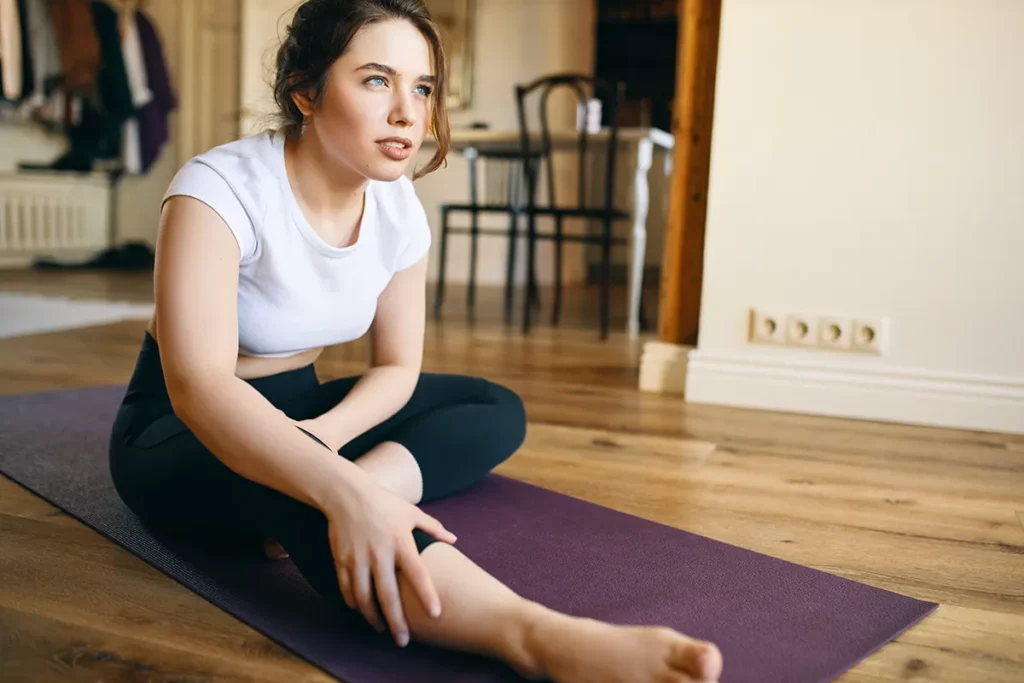
Getting out of the car, standing up after a long desk day, or trying to hit depth in a squat should not feel like your hip has rusted in place. Knowing how to ease hip stiffness starts with understanding that the answer is rarely just a harder stretch. Your hip may be reacting to too much sitting, a sudden jump in training, reduced strength, poor recovery, or a movement pattern that needs attention.
For runners, gym-goers and field sport players, a stiff hip can gradually change how you move. You may start shortening your stride, loading one leg more heavily, or feeling your lower back work harder than it should. For others, stiffness makes simple daily jobs such as putting on shoes or climbing stairs frustrating. The good news is that many cases improve with the right balance of movement, strength and sensible load management.
Why hips become stiff in the first place
The hip is a deep ball-and-socket joint designed to be mobile and stable. It needs enough range of movement to walk, run, squat, turn and get up from the floor, but it also needs the surrounding muscles to control that movement. When either part of that equation is under pressure, stiffness can follow.
Sitting for long periods can leave the front of the hips feeling tight, particularly if you move straight from a desk into a training session. Equally, doing too much too soon can irritate the muscles, tendons or joint structures around the hip. A runner increasing mileage, a footballer returning after a break, or someone suddenly adding heavy squats may all notice their hip becoming restricted.
Stiffness does not always mean the hip itself is the only issue. The lower back, pelvis, glutes, adductors and even the ankle can influence how the hip moves. This is why simply stretching the area that feels tight may provide short-term relief but fail to solve the reason it keeps returning.
How to ease hip stiffness without forcing it
The aim is to restore comfortable movement, not to push through sharp pain or aggressively force range. A useful rule is that your hip should feel the same or better after an exercise and settle back to its usual level within 24 hours. If it is increasingly sore, pinchy or painful afterwards, reduce the range, repetitions or training load.
Start with gentle, regular movement
If you have been still for hours, your body often needs movement before it needs stretching. Take a five-minute walk, climb a few stairs, or move through a comfortable bodyweight squat range while holding on to a kitchen counter if needed. Little and often is usually more effective than one long mobility session once a week.
Try slow hip circles while standing, keeping your pelvis as level as possible. You can also lie on your back with knees bent and gently rock both knees from side to side. These movements should feel easy and controlled rather than like a test of flexibility.
For people who sit at work, breaking up long periods of sitting matters. Stand, walk or change position every 30 to 60 minutes where possible. You do not need a perfect posture all day. Your hips generally respond better to varied positions than being held in any one position for too long.
Use stretches carefully, not endlessly
A stretch can feel relieving when the front of the hip, glutes or inner thigh feels restricted. A half-kneeling hip-flexor stretch is often helpful: kneel on one knee, gently tuck your pelvis under and shift forwards slightly until you feel a mild stretch at the front of the rear hip. Keep your chest tall and avoid arching your lower back to create more range.
A figure-four glute stretch can also be useful. Lying on your back, place one ankle over the opposite thigh and gently draw the supporting leg towards you. Stop if you get sharp pain, catching or a deep pinch at the front of the hip.
Hold a comfortable stretch for around 20 to 30 seconds, breathing normally, and repeat two or three times. Stretching should leave you looser, not sore. If it only helps for minutes before stiffness returns, it is a sign that strength, activity levels or a more detailed assessment may be needed.
Build strength around the hip
Hip mobility is easier to keep when the muscles around the joint can support it. Weak or poorly coordinated glutes, adductors and trunk muscles can make the hip work harder during running, lifting and changes of direction.
Begin with simple exercises that you can perform with good control. Glute bridges are a useful starting point: lie on your back, bend your knees and press through your feet to lift your hips without over-arching your back. Side-lying leg lifts, controlled sit-to-stands and low step-ups can also improve hip control.
The right exercise depends on your current symptoms and goals. A recreational runner with stiffness after long runs may need single-leg strength and a review of training volume. Someone whose hip stiffens after desk work may benefit more from frequent movement breaks, basic glute strength and improved tolerance to bending and squatting. There is no single best exercise for every hip.
Warm up for the activity you actually do
Static stretching before sport is not always the most useful preparation. If you are about to run, play football or train in the gym, choose a warm-up that gradually resembles the activity ahead. Start with brisk walking or light cycling, then use bodyweight squats, lunges within a comfortable range, leg swings and movement drills that do not provoke pain.
For strength training, take time to build up to working weight. A stiff hip often complains when you go from a chair all day straight into heavy deadlifts or deep squats. A few progressive warm-up sets can make a real difference.
Adjust training before stiffness turns into pain
You do not always need to stop being active, but you may need to be more selective for a short period. If deep squats cause a sharp pinch, reduce the depth and work in a pain-free range while you build control. If running worsens symptoms, cut back distance or intensity temporarily rather than trying to push through every session.
Recovery also matters. Poor sleep, high stress and repeated hard training days can make muscles feel persistently tight and sensitive. Keep easy days genuinely easy, maintain regular meals and hydration, and allow enough recovery between demanding lower-body sessions.
Hands-on treatment such as sports massage, soft-tissue work or dry needling may help some people feel more comfortable and move more freely. However, these approaches tend to work best when combined with a tailored rehabilitation plan. Relief is useful, but lasting change usually comes from addressing the movement and loading habits behind the stiffness.
When hip stiffness needs professional assessment
Arrange an assessment if hip stiffness is not improving after a couple of weeks of sensible self-management, keeps returning whenever you train, or is limiting work, sleep or normal daily movement. A clinician can assess how your hip, lower back and surrounding muscles are working together, then give you a plan that fits your sport, job and current capacity.
Seek prompt medical advice if you have severe pain after a fall or injury, cannot put weight through the leg, have a visibly swollen or hot joint, develop fever or feel unwell, or experience numbness, weakness or pain that is rapidly worsening. Persistent night pain or unexplained weight loss also deserves medical attention.
At Hamilton Pain and Sports Injury Clinic, hip treatment is not based on chasing one tight muscle. A practical assessment can identify what is limiting you, combine hands-on care where appropriate, and build a clear route back to walking, training and sport with more confidence.
A stiff hip is often your body asking for a better balance of movement, strength and recovery. Start gently, stay consistent and pay attention to what changes your symptoms. The goal is not to force your hip into range today, but to give it the capacity to keep moving well tomorrow.