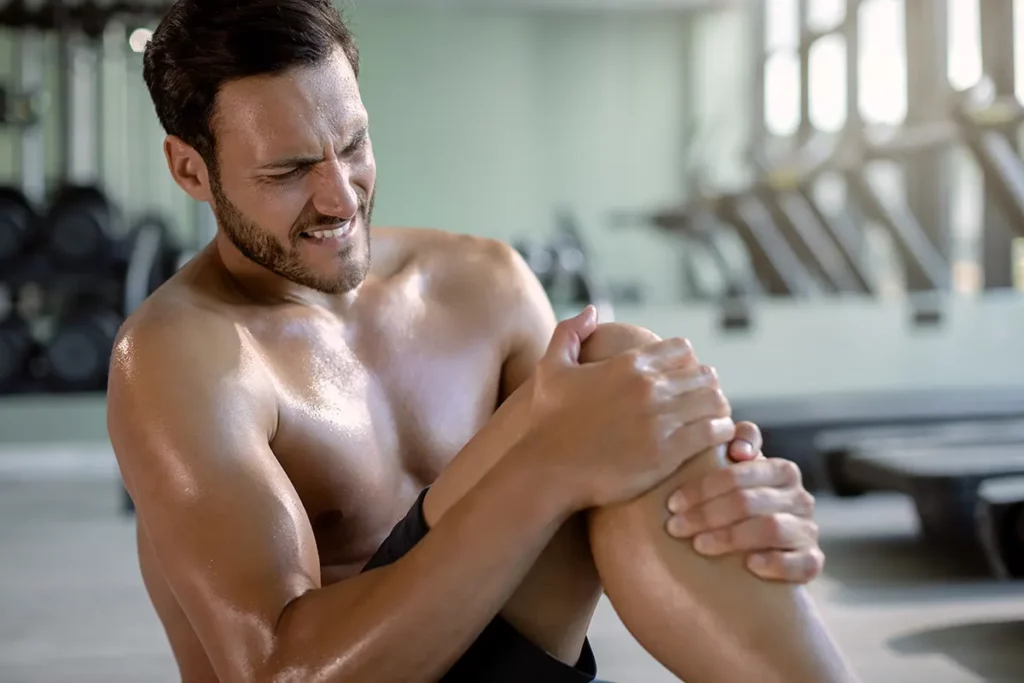
A sharp pain during a deadlift, a shoulder that catches on the bench press, or a knee that swells after leg day can stop training in an instant. Gym injury recovery is not simply a matter of waiting until the pain disappears. The aim is to understand what your body can tolerate now, calm the aggravation, and gradually rebuild the strength and confidence needed to train properly again.
For active people, the hardest part is often not the injury itself. It is the uncertainty. Should you push through? Stop everything? Stretch more? The right answer depends on the area involved, how the symptoms started, and what happens during and after movement. A clear plan replaces guesswork and gives you a sensible route back to the gym.
Gym injury recovery starts with the right response
The first 24 to 72 hours can shape what happens next. If you felt a sudden pop, have significant swelling or bruising, cannot bear weight, have a visible deformity, numbness, weakness, or pain that is rapidly worsening, seek urgent medical assessment. These symptoms can signal an injury that needs more than self-management.
For many gym-related aches and strains, however, the best first step is to reduce the movements that clearly provoke symptoms rather than becoming completely inactive. If squatting causes sharp knee pain, repeatedly testing your squat is unlikely to help. But walking, gentle cycling, controlled upper-body work, or a modified lower-body exercise may still be appropriate.
This distinction matters. Complete rest can leave an area stiffer, weaker and less prepared for the demands you want to return to. Training through sharp or escalating pain can turn a manageable problem into a longer lay-off. The useful middle ground is relative rest: keep moving, but remove or adjust the load that your body is not tolerating.
Pain is also not a perfect damage meter. A mild ache that settles quickly and does not worsen the following day can be acceptable during rehabilitation. Sharp pain, a feeling of instability, increasing swelling, altered sensation, or symptoms that linger for days after each session are signs that the exercise, range or volume needs to change.
Why injuries often happen in the gym
Gym injuries are rarely caused by one bad rep alone. A heavy lift may be the final trigger, but there is often a build-up behind it. Training volume may have increased too quickly, sleep may have been poor, recovery between sessions may have been limited, or a previous niggle may have changed how you move.
Technique matters, but it is not the whole story. A technically sound squat can still irritate a knee if the load, depth, frequency or recovery level is beyond what that person can currently manage. Equally, a movement that looks imperfect is not automatically harmful. Bodies vary, and the goal is not to chase a textbook position at all costs. It is to build capacity for the positions and activities that matter to you.
Common examples include a runner adding heavy lunges and squats too quickly, a desk-based worker returning to overhead pressing with a stiff neck and shoulder, or a field sport player trying to maintain high gym volume during a demanding season. In each case, the solution is usually more specific than “stop training”.
Find the aggravating pattern
Start by identifying what actually causes symptoms. Is it the lowering phase of a squat, the bottom position of a bench press, gripping a bar, twisting, or the day after a session? Notice whether discomfort appears at a particular weight, range of motion or number of sets.
This information helps you modify training intelligently. A painful back squat, for example, might be temporarily replaced by a lighter split squat, a box squat, a leg press within a comfortable range, or an alternative exercise that trains the same goal without flaring symptoms. The best replacement depends on the individual, not the name of the exercise.
Keep training, but change the dose
A good rehabilitation plan should fit real life. If the injury is in your shoulder, you may still be able to train legs, core and conditioning. If your knee is sore, upper-body sessions and low-impact cardio may keep your routine intact. Staying active can protect your fitness, mood and motivation while the affected area rebuilds.
The key is dosage. Load, repetitions, tempo, range of movement and weekly frequency all affect how an injured area responds. Reducing the weight is one option, but it is not the only one. Sometimes a shorter range, slower tempo, fewer sets or an extra recovery day makes the movement manageable.
Use your response after exercise as feedback. Symptoms should remain mild and controlled during training, settle soon afterwards, and not leave you noticeably worse the next morning. If pain climbs through the session, your movement changes significantly to avoid it, or you experience a flare-up that lasts more than 24 hours, reduce the demand next time.
Avoid changing every variable at once. If you lower the weight, shorten the range and halve your sets, it becomes difficult to know what helped. Make one or two sensible adjustments, monitor the response, and progress gradually.
Rebuild strength before testing your limits
Once symptoms are settling, rehabilitation should move beyond pain relief. The tissues and movements involved need enough capacity to cope with the gym, work, sport and everyday life. Hands-on treatment can ease pain and improve movement for some people, but it is most useful when paired with a clear exercise plan.
Early exercises may focus on controlled movement and isometric holds, where the muscle works without much joint movement. From there, progressive resistance training helps restore strength through a broader range. Balance, coordination and sport-specific tasks may be needed too, especially after ankle, knee, hip or shoulder injuries.
The progression should reflect your goal. Someone who wants to return to recreational lifting may need to build towards a comfortable squat, hinge, push and pull. A rugby player may also need to sprint, change direction and tolerate contact. A parent with back pain may need to lift a child, carry shopping and sit at work without feeling guarded.
Do not rush from light rehabilitation exercises straight back to your previous personal best. Build stepping stones. If a barbell deadlift caused the problem, you might first regain a pain-free hip hinge, then progress to a raised kettlebell deadlift, followed by a lighter barbell from blocks, before returning to the floor. This can feel slower than testing yourself every week, but it usually creates a more reliable return.
When is it safe to return to normal gym training?
There is no single date that applies to every injury. A useful return-to-training decision considers pain, range of movement, strength, control and confidence. You should be able to perform the key movements for your training goal with good control and without a meaningful increase in symptoms during the next day.
For a shoulder issue, that may mean pressing, pulling and hanging with confidence before high-volume overhead work. For a knee problem, it may mean tolerating squats, step-downs and single-leg work before returning to jumps, heavy leg sessions or running. Comparing one side with the other can help, although a previous injury does not always need to feel completely identical before you progress.
Confidence is worth taking seriously. If you are constantly bracing for pain or avoiding one side, your body may compensate and overload another area. A gradual, successful exposure to the movement you fear is often more useful than waiting for the moment when you feel 100 per cent ready.
Get help when a niggle keeps returning
Repeated flare-ups are frustrating, particularly when you can train for a few weeks before the same pain returns. This often means the original symptoms settled, but the underlying load tolerance, movement strategy or training plan was not fully addressed.
A sports therapist can assess how you move, what your training actually involves, and what is limiting your return. The answer may include hands-on treatment for short-term relief, but it should also include practical progressions you can use between appointments. At Hamilton Pain and Sports Injury Clinic, treatment is built around the person, their sport and the activities they want to return to, rather than a generic injury label.
It is particularly worth getting assessed if pain persists beyond a couple of weeks, repeatedly returns, affects sleep or daily activity, or stops you trusting your body under load. An individual plan can help you avoid the cycle of resting, restarting too quickly and getting injured again.
Your training does not have to disappear because of pain. Give the irritated area the right amount of respect, keep the rest of your body moving, and build your way back one successful session at a time.