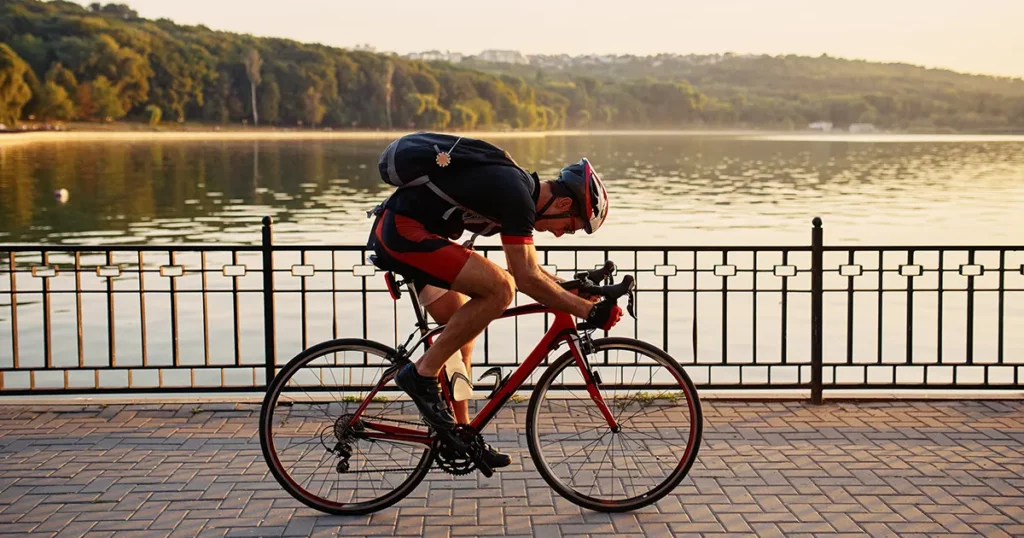
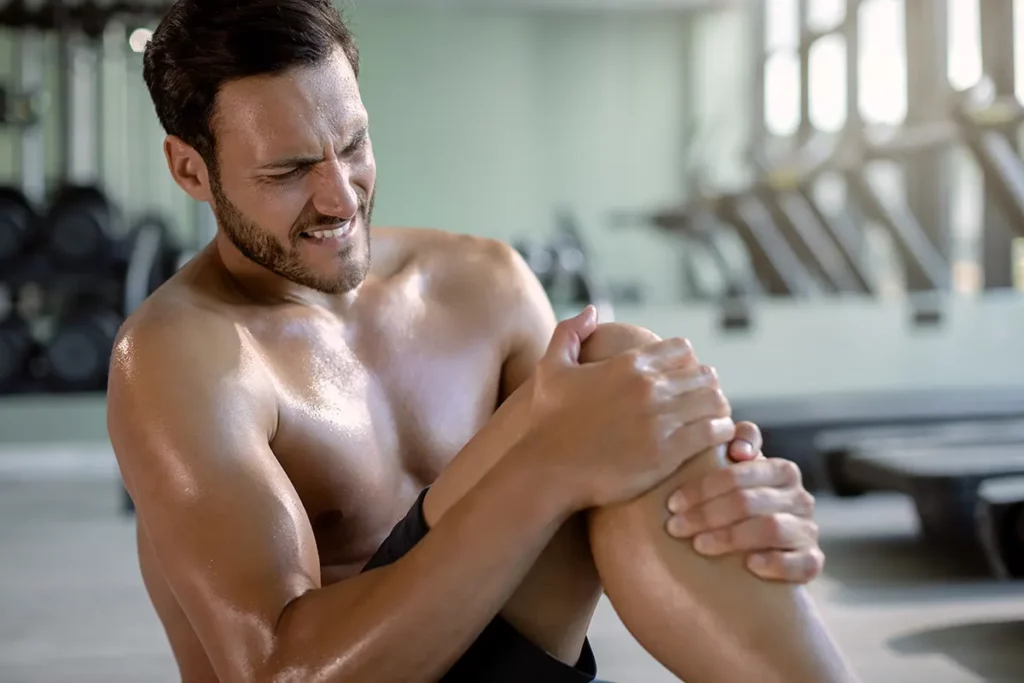
A painful Achilles can make every step feel uncertain. You may notice it getting out of bed, climbing stairs, pushing off during a run or accelerating on the pitch. The best exercises for Achilles tendinopathy are not simply the hardest calf exercises you can tolerate. They are the ones matched to your current pain, strength and sporting goals, then progressed steadily.
Achilles tendinopathy usually develops when the tendon is asked to cope with more load than it is ready for. That might follow a jump in running mileage, a return to football after time off, more hill work, new gym training or long days spent on your feet. Complete rest rarely solves the problem for long. The tendon needs the right amount of loading to become stronger and more reliable again.
Why exercise is central to Achilles recovery
The Achilles tendon transfers force from the calf muscles to the heel, helping you walk, climb, sprint and jump. When it becomes painful and sensitive, avoiding every activity can reduce your confidence and calf capacity. On the other hand, trying to run through worsening pain can keep the tendon irritated.
A structured rehabilitation plan sits between those extremes. It builds the strength of both calf muscles – the gastrocnemius, which works more with a straight knee, and the soleus, which works more with a bent knee. It also gradually prepares you for the speed, impact and repetition your sport or daily routine demands.
Some discomfort during exercises can be acceptable. As a practical guide, mild pain that stays manageable and settles back to your usual level by the following day is often reasonable. Pain that becomes sharp, causes limping or leaves the tendon clearly worse for more than 24 hours suggests the session was too much.
Best exercises for Achilles tendinopathy
Your starting point depends on how irritable the tendon is. If walking is sore, begin with slower, controlled work. If you can already perform calf raises comfortably, you may be ready for heavier strengthening. Quality matters more than rushing through repetitions.
Isometric calf raise holds
Isometric holds are useful when the Achilles is particularly sore, including during a flare-up. Stand near a wall or worktop for balance, rise onto both forefeet, and hold the position with your heels lifted. Keep your weight even through both sides and avoid rolling onto the outside of the foot.
Hold for 30 to 45 seconds, rest, then repeat for four or five holds. Start with both legs, then progress towards holding more weight through the affected side as symptoms allow. These holds will not replace full strengthening, but they can be a sensible first step when movement is painful.
Seated calf raises
Seated calf raises target the soleus muscle, which is heavily involved in walking, running and repeated push-off. Sit with your feet flat and knees bent to roughly 90 degrees. Lift your heels slowly, pause at the top, then lower with control.
Begin with body weight if needed. As this becomes easy, add a weight across the thighs, using a gym machine, dumbbell or loaded bag. Aim for three sets of 10 to 15 repetitions, allowing the last few repetitions to feel challenging while your technique stays controlled.
Standing calf raises
Standing calf raises place more emphasis on the gastrocnemius. Hold onto something stable, keep the knees straight but not locked, rise steadily onto the balls of both feet and lower over around three seconds.
Initially, three sets of 8 to 12 repetitions on both legs may be enough. Progress by placing more body weight through the affected side, then move to single-leg calf raises. A useful long-term goal for many active adults is to complete repeated single-leg raises with a similar height and control on both sides. The exact number is less important than restoring strength for your own activity.
Heavy, slow calf strengthening
Once basic raises are tolerable, increasing resistance helps the tendon and calf adapt. This can be done with a seated calf raise machine, standing calf raise machine, dumbbells or a barbell, depending on experience and access to equipment.
Use a controlled tempo: lift for around two seconds, pause briefly, and lower for three seconds. Three or four sets of 6 to 10 repetitions is often a productive strength range. Include both straight-knee and bent-knee variations across the week, as they train different parts of the calf complex.
Heavier is not automatically better. The right load is one that challenges you without a major symptom flare-up or compensating through the hips, knees or uninjured side.
Eccentric heel lowers
Eccentric training means emphasising the lowering phase of a calf raise. Rise up using both feet, transfer your weight to the affected side, then lower slowly on that leg. It can be effective, particularly for mid-portion Achilles pain, but it is only one way to strengthen the tendon. Heavy, slow resistance and well-progressed calf raises can work just as well for many people.
If your pain is right at the heel bone, known as insertional Achilles tendinopathy, be careful with using a step. Dropping the heel below the level of the step may compress the tendon and aggravate symptoms. In this situation, perform calf raises on flat ground and seek individual advice before adding a deeper range.
Step-ups, walking and return-to-running drills
Calf strength alone is not the finish line. You need to reintroduce the tasks that caused the problem. Step-ups, controlled hill walking and faster walking can bridge the gap between gym exercises and running.
For runners, a gradual return might begin with short run-walk intervals on flat ground, leaving at least a day between early sessions to monitor symptoms. Footballers and court-sport athletes need further progressions, including jogging, acceleration, deceleration, hopping and changes of direction. Add one demand at a time. A sharp increase in speed, hills and volume together is a common reason symptoms return.
How often should you do Achilles exercises?
Most people benefit from calf strengthening two to four times each week, depending on how heavy the sessions are and what other training they are doing. Isometric holds may be used more regularly in the early stages if they help settle pain.
Recovery is part of the programme. If you have a demanding leg session on Tuesday, a hard run on Wednesday and five-a-side on Thursday, the tendon has very little chance to adapt. It may be more effective to adjust the total weekly load than to keep adding exercises.
Keep a simple note of morning stiffness, pain during activity and how the tendon feels the next day. This gives you better information than judging progress from one session alone. Tendons often improve gradually over weeks and months, not overnight.
When exercises need individual guidance
Not every sore Achilles is tendinopathy. Sudden severe pain, a pop at the back of the ankle, marked swelling, bruising, weakness when pushing off or an inability to stand on tiptoes should be assessed promptly. These symptoms can point to a more serious injury.
You should also get tailored advice if pain has persisted for several months, keeps returning whenever you increase training, or sits directly at the heel where footwear pressure is a problem. An assessment can identify calf weakness, ankle stiffness, training errors and movement habits that are keeping the issue going. At Hamilton Pain and Sports Injury Clinic, rehabilitation is built around the person, their sport and the activities they want to return to, rather than a one-size-fits-all exercise sheet.
The goal is not merely to perform a pain-free calf raise in the clinic. It is to trust your ankle when you rush for the bus, run a 10K, train in the gym or push off for the next ball. Start at the level your tendon can manage, build patiently, and let consistent strength work earn back your confidence.